Painting: The Flip

The Flip captures the current dichotomy of viewpoints in our country. It is also profoundly personal. In its darker shadows, Jordan used paint she made herself from ash and charcoal collected from an intentionally set arson fire that burned her gallery several years ago on the Fourth of July. The image — a bright American flag on one side and faded on the other — symbolizes resilience and erasure.
It asks: Is this nation in descent, or in rebirth? At half-mast in mourning, tumbling in free-fall, or flying at full force?

The answers are determined by the perspective of the viewer. The painting can be viewed in any orientation. Turn it upside down, right-side up, or to either side—each angle reframes the story. Inverted, the flag cries of distress. Upright, it ascends into the clouds.

Tilt it, and the background shifts: smoke, fog, waves, or sky. Depending on the position, the stripes either bleed from red into black and white, thinning almost to disappearance, or boldly go from black and white into full, vibrant color.
WWII War Hero's Piano: Steinway Victory Vertical
Provided to Colonel George Boucher in Normandy, France

Jordan leaning on Colonel Boucher's Victory Vertical piano, smiling at the progress
Among Jordan's most poignant restorations is the Victory Vertical piano once owned by Colonel George H. Boucher, a decorated war hero who served in both WWII and the Korean War. Colonel Boucher was part of the D-Day invasion in Europe and helped clear out Nazi work and death camps. He was awarded fourteen medals and awards, several Presidential citations, and had the distinction of having engaged the enemy in combat 94.4% of the time on the front line. Both of his hands were wounded by shrapnel, but he did not accept medical assistance, nor a purple heart because he felt he did not deserve special recognition for doing his job. He also served as chaplain and conducted worship and prayer on the front lines.

Colonel George Boucher

Colonel Boucher in military uniform
Colonel Boucher brought this Victory Vertical home to the United States from Normandy and stripped the olive drab paint off of the piano as a statement that it would never see war again (an act called "decommissioning").
Jordan acquired the piano from Florida and brought it home to Washington for rebuilding. Over the following months, she uncovered traces of Colonel Boucher's handiwork: innovative repairs and design modifications he had begun but never finished. In a collaboration across time, Jordan completed his unfinished work to honor the man and his piano. Rather than repaint it, she left the piano stripped. Her restoration is a playable, living archive she still calls "his" piano that she has the privilege of stewarding.
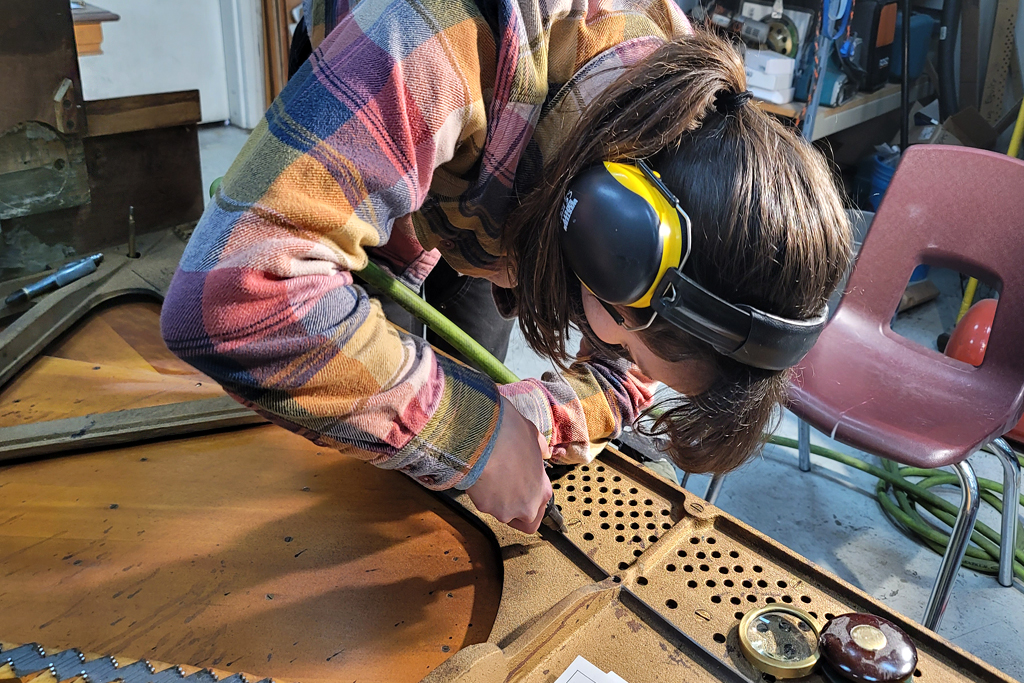
Jordan shaping the V Bar of a Steinway Victory Vertical piano

Jordan working on Colonel Boucher's Steinway Victory Vertical
Years after Jordan completed the restoration, she learned that members of her family had been imprisoned in concentration camps during WWII that Colonel Boucher had helped liberate. The revelation was unexpected and deeply moving. Colonel Boucher passed away in 2018 at age 103.
The song Jordan proposes to play on Colonel Boucher's piano for the gala carries this history forward.
Release was composed in pieces over the course of a decade, each phrase an emotional expression in time. Early sections were written during a time of grappling with hearing loss and the fear of permanent deafness; later ones in gratitude after regaining much of her hearing. Most striking is the middle portion of space she left open to be played in the moment, leaving room for inspiration. Though she initially considered the song a musical translation of her feelings, years later she realized it carried a profound double meaning—her release from silence and her family's liberation.
Artist/Piano Rebuilder: Jordan A. Cook
Jordan is a piano rebuilder and watercolor artist who believes that history is not confined to the past but it alive and present in shaping the future. She specializes in the restoration of WWII-era Steinway Victory Verticals—compact pianos delivered by B-17 bombers into active war zones to boost troop morale—and is one of very few rebuilders worldwide entrusted with their care.

Jordan at the Museum of Flight, working on a Victory Vertical piano
Jordan's journey into restoration began during a period of profound hearing loss when she encountered a fire- and water-damaged 1925 Steinway L, needing to regain its voice. Pressing a soot-covered key, she felt the piano's silent story—and her calling. That piano, named Arukah (Hebrew for restored to a better, though different, condition), became the namesake of her business, Arukah Piano.
In addition to restoration work, Jordan composes music and is an internationally exhibited artist working in gouache, watercolor, and mixed media made from her own foraged pigments, paint, and ink. Her paintings have been shown in historical and contemporary galleries around the world, including the Children's Holocaust Museum at Terezin, the Matterhorn in Switzerland, and at Maidan Nezalezhnosti in Kyiv, Ukraine.
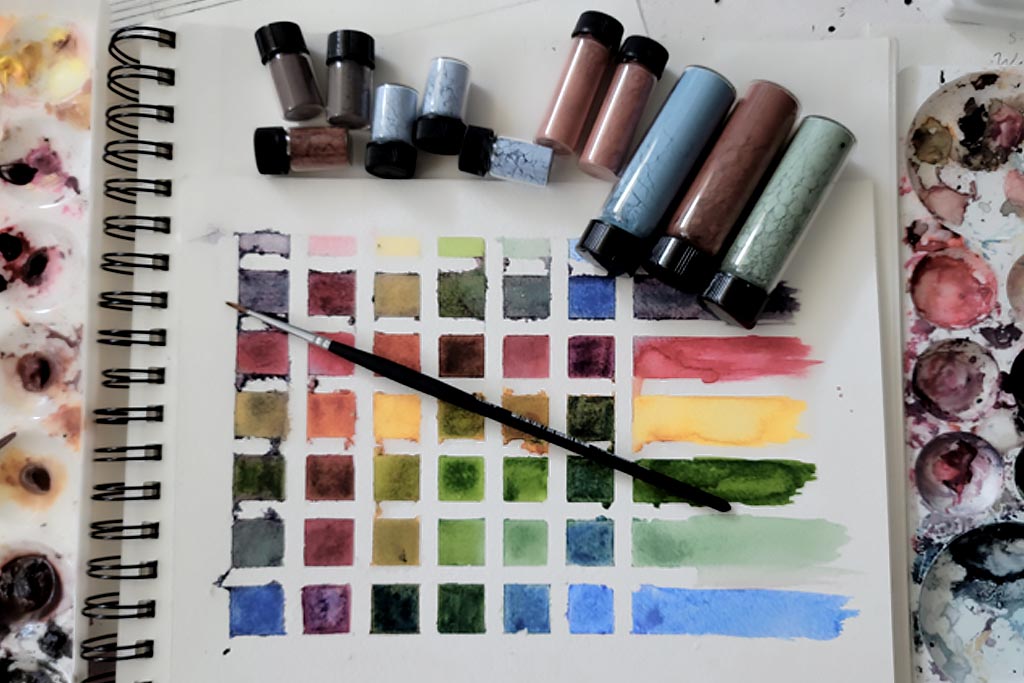
Jordan's palette swatches and containers of foraged pigment for paint
Her artistic journey began early. At just nine years old, she held a joint gallery showing with the late Fred Oldfield at the Western Heritage Museum Art Gallery in Puyallup, Washington. By eight, she was interviewed by KMPS radio personality Ichabod Caine and the Waking Crew, and at twelve, she participated at a concert at King David's Tower in Israel. At seventeen, she was a featured speaker at The Art of Creativity workshop hosted at the vacation home of Prince William and Kate Middleton.
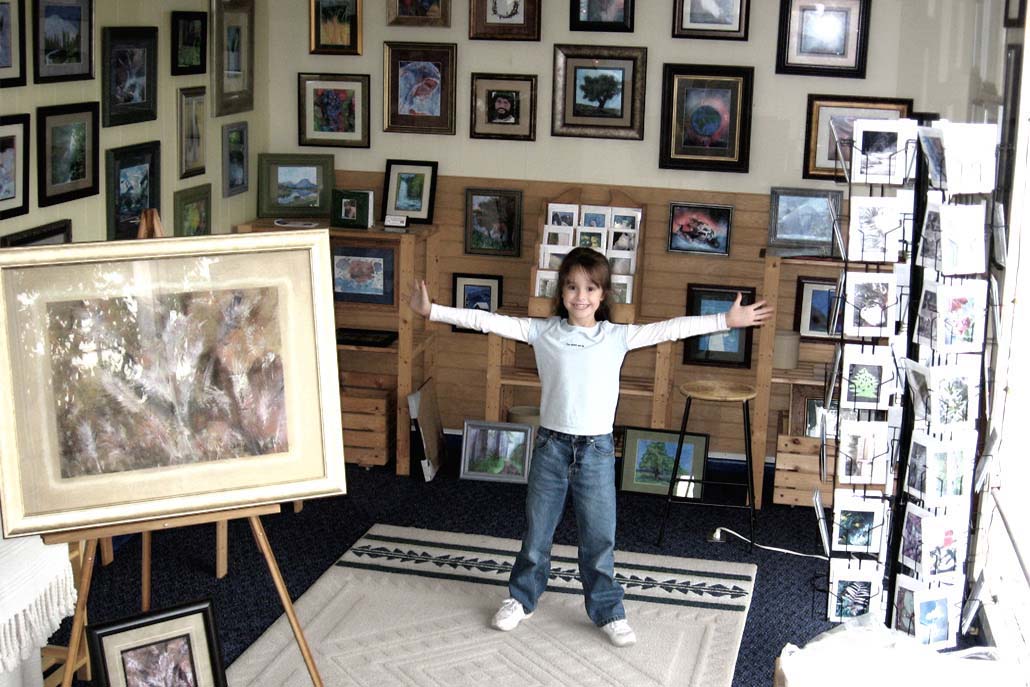
Jordan at five years old in her gallery full of paintings