The Flip
A flag painted with ash and charcoal from an arson fire that burned her gallery on the Fourth of July. One side bright, one side faded; a study of resilience and erasure.

A flag that changes with the eye that holds it
The Flip captures the present dichotomy of viewpoints in our country, and it is profoundly personal. In its darker shadows, Jordan used paint she made herself from ash and charcoal collected from an intentionally set arson fire that burned her gallery several years ago on the Fourth of July. The image, a bright American flag on one side and faded on the other, speaks to both resilience and erasure.
Is the nation in descent, or in rebirth? At half-mast in mourning, tumbling through free fall, or flying at full force?
The answers lie in the eyes of the viewer.
This painting can be viewed in any orientation. Turn it upside down, right side up, or to either side; each angle reframes the story. Inverted, the flag cries of distress. Upright, it ascends into the clouds. Tilt it, and the background shifts: smoke, fog, waves, or sky. Depending on the position, the stripes either bleed from red into black and white, thinning almost to disappearance, or boldly go from black and white into full, vibrant color. The back of the piece carries hanging hooks at both the top and the bottom, so it can be flipped and rehung in any orientation with ease.


Meet The Troops
Each piano opens a different window on the war: the Pacific and New Guinea, Normandy and Korea, the Dutch resistance, the southern home front, and a story of survival. Select a piano to read its history.
General MacArthur Pacific Theater · New Guinea · made in the Steinway factory on the General's 63rd birthday, January 26, 1943 More
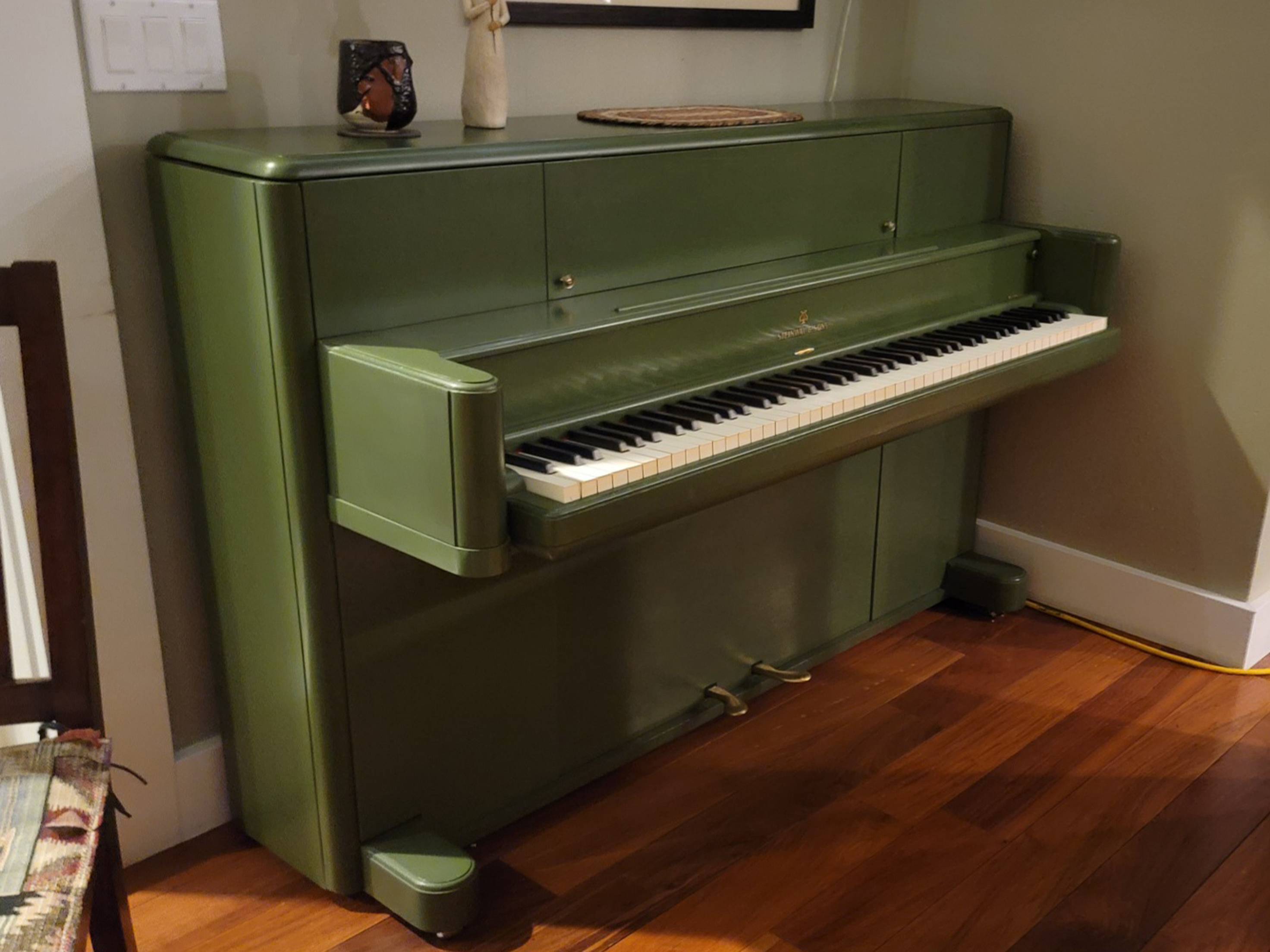
Listed in Steinway's archives as a Regency Victory Vertical, the prototype model that preceded the standard run, this piano was completed on January 26, 1943, General Douglas MacArthur's sixty-third birthday, in the very week the Casablanca decisions reached the world and the Allies committed to accepting only the unconditional surrender of the Axis. It was stationed at Hollandia in the Pacific Theater, in the officers' quarters known as "the mansion," during MacArthur's command.
MacArthur's son, Arthur MacArthur IV, a child prodigy who would go on to become a concert pianist, played this instrument as a boy. When the troops moved on, a woman was permitted to keep the piano. It made its way to a bistro in France, then to the workshop of Andrew Giller, a renowned piano rebuilder in the United Kingdom, before crossing the Atlantic by cargo container to its current home in Washington State. Its provenance is documented through original photographs, newspaper articles, and Steinway's own records.
Colonel George Boucher Normandy and Korea · brought home from the front and stripped of its olive drab to never see war again More
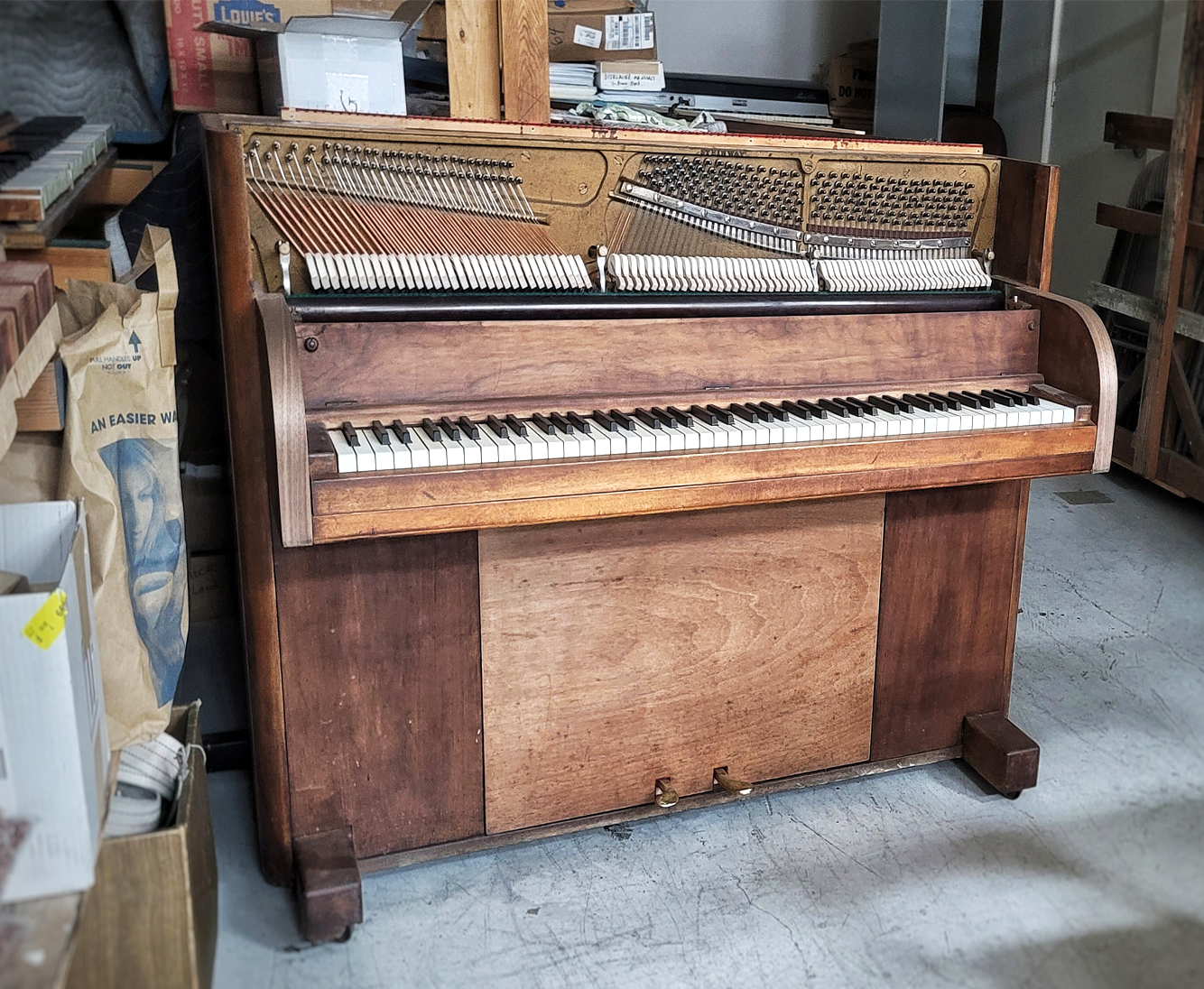
Among Jordan's most poignant restorations is the Victory Vertical piano once owned by Colonel George H. Boucher, a decorated war hero who served in both World War II and the Korean War. Colonel Boucher was part of the D-Day invasion in Europe and helped clear out Nazi work and death camps.
He was awarded fourteen medals and commendations, several Presidential citations, and held the distinction of having engaged the enemy in combat 94.4% of the time on the front line. Both of his hands were wounded by shrapnel; he refused medical assistance and declined a Purple Heart, feeling he deserved no special recognition for doing his job. He also served as chaplain, conducting worship and prayer on the front lines.
Colonel Boucher brought this Victory Vertical home from Normandy and stripped the olive drab paint from it as a statement that it would never see war again, an act known as decommissioning.
Jordan acquired the piano from Florida and brought it home to Washington for rebuilding. Over the following months, she uncovered traces of Colonel Boucher's own handiwork: innovative repairs and design modifications he had begun but never finished. In a collaboration across time, Jordan completed his unfinished work to honor the man and his piano. She kept the wood bare, exactly as the Colonel left it. Her restoration is a playable, living archive she still calls "his" piano, one she has the privilege of stewarding.
Years after completing the restoration, Jordan learned that members of her own family had been imprisoned in concentration camps during WWII that Colonel Boucher had helped liberate. The revelation was unexpected and deeply moving. Colonel Boucher passed away in 2018 at the age of 103.
A collaboration across time, completed to honor the man and his piano.
The song Jordan plays on Colonel Boucher's piano, Release, was composed in pieces over the course of a decade, each phrase an emotional expression in time. Early sections were written while she grappled with hearing loss and the fear of permanent deafness; later ones in gratitude after regaining much of her hearing. Most striking is the middle portion, a space she left open to be played in the moment, leaving room for inspiration. Years later she realized the song carried a profound double meaning: her own release from silence, and her family's liberation.
Theodora "Dodie" Van Doorninck The Dutch resistance · recognized by General Eisenhower and Yad Vashem More
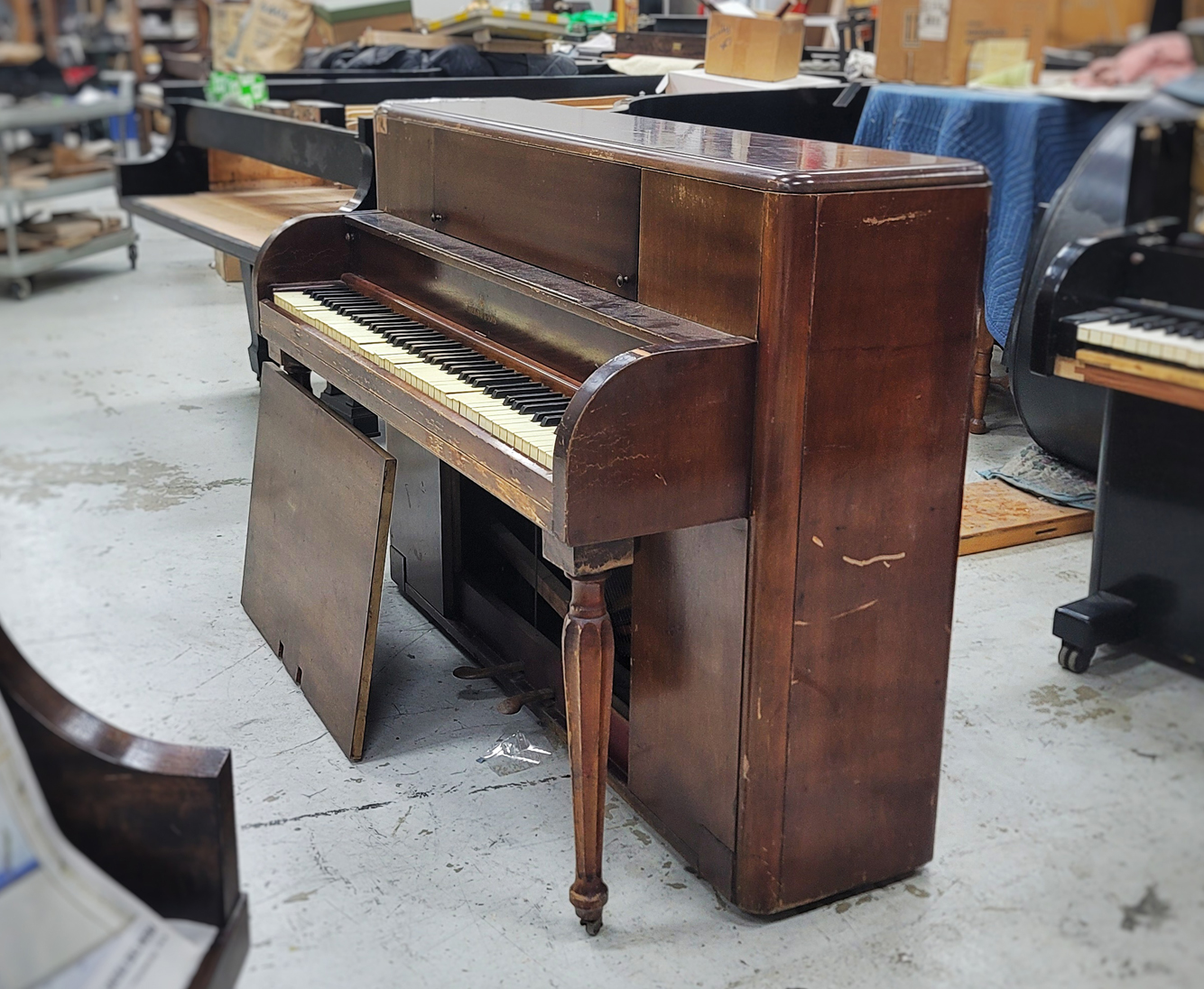
Theodora is named for Theodora Van Doorninck Cole, whose family was part of the Dutch resistance during World War II. They sheltered downed Allied pilots, hid Jewish families, and protected Italian prisoners of war, at extraordinary personal risk.
Their bravery was formally recognized by General Eisenhower and by Yad Vashem, Israel's Holocaust remembrance authority. This is her piano, carried forward by the same hands that rebuilt Colonel Boucher's, a tribute to a family who chose courage when it cost them everything to do so. Its full provenance is still being assembled.
Bishop The southern home front · a North Carolina congregation, then a church basement for decades More
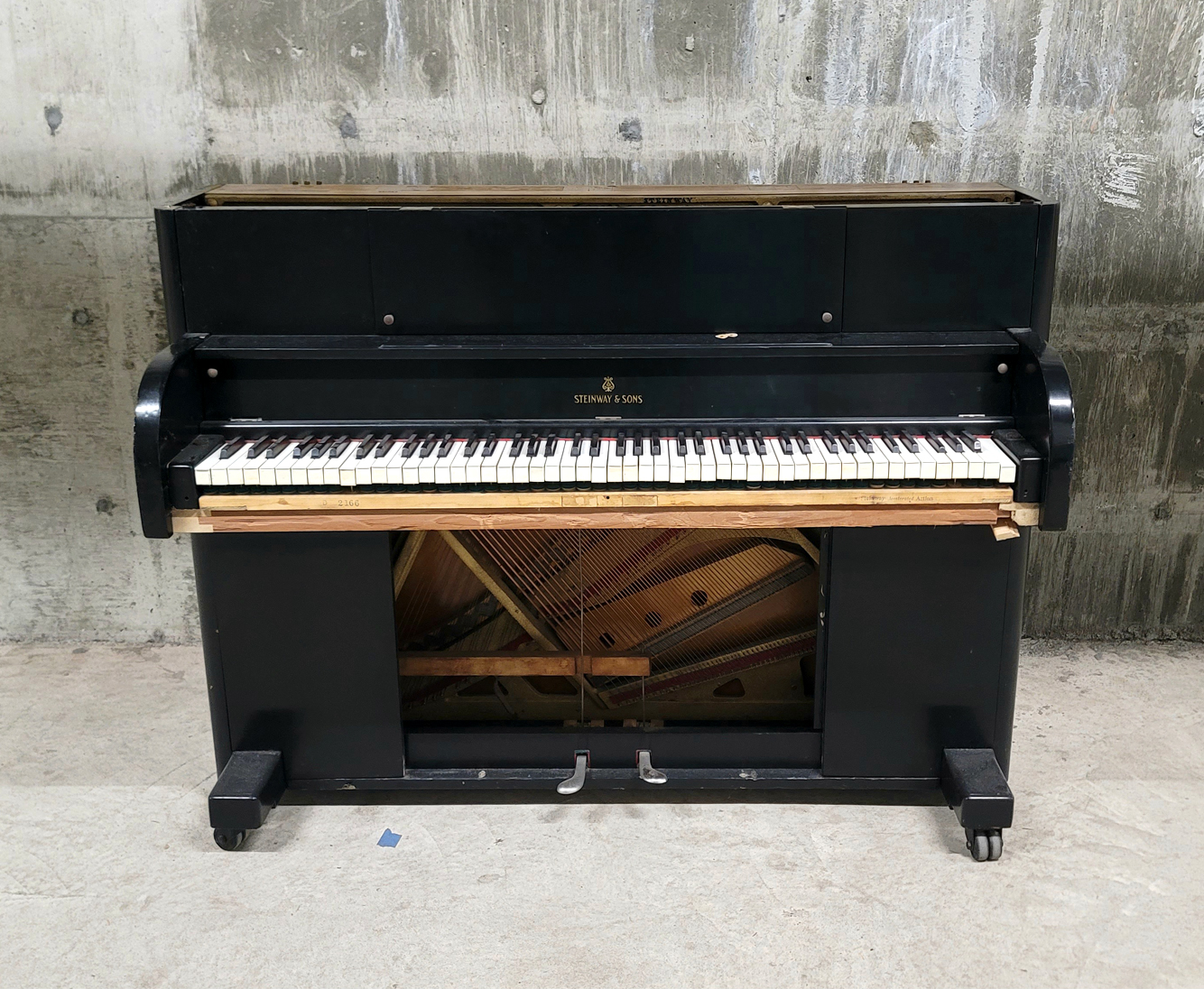
Bishop carried music to a North Carolina congregation through the war years, the heartbeat of a Black church and the gatherings it held. When the war ended, the piano fell silent. It rested in a church basement for decades, unseen and nearly forgotten, until it surfaced again for this restoration.
It is dated November 3, 1948, the morning the nation woke to the infamous and mistaken headline, "Dewey Defeats Truman."
Charley Helene Milton A story of survival · three Gulf Coast hurricanes weathered at Sarasota More
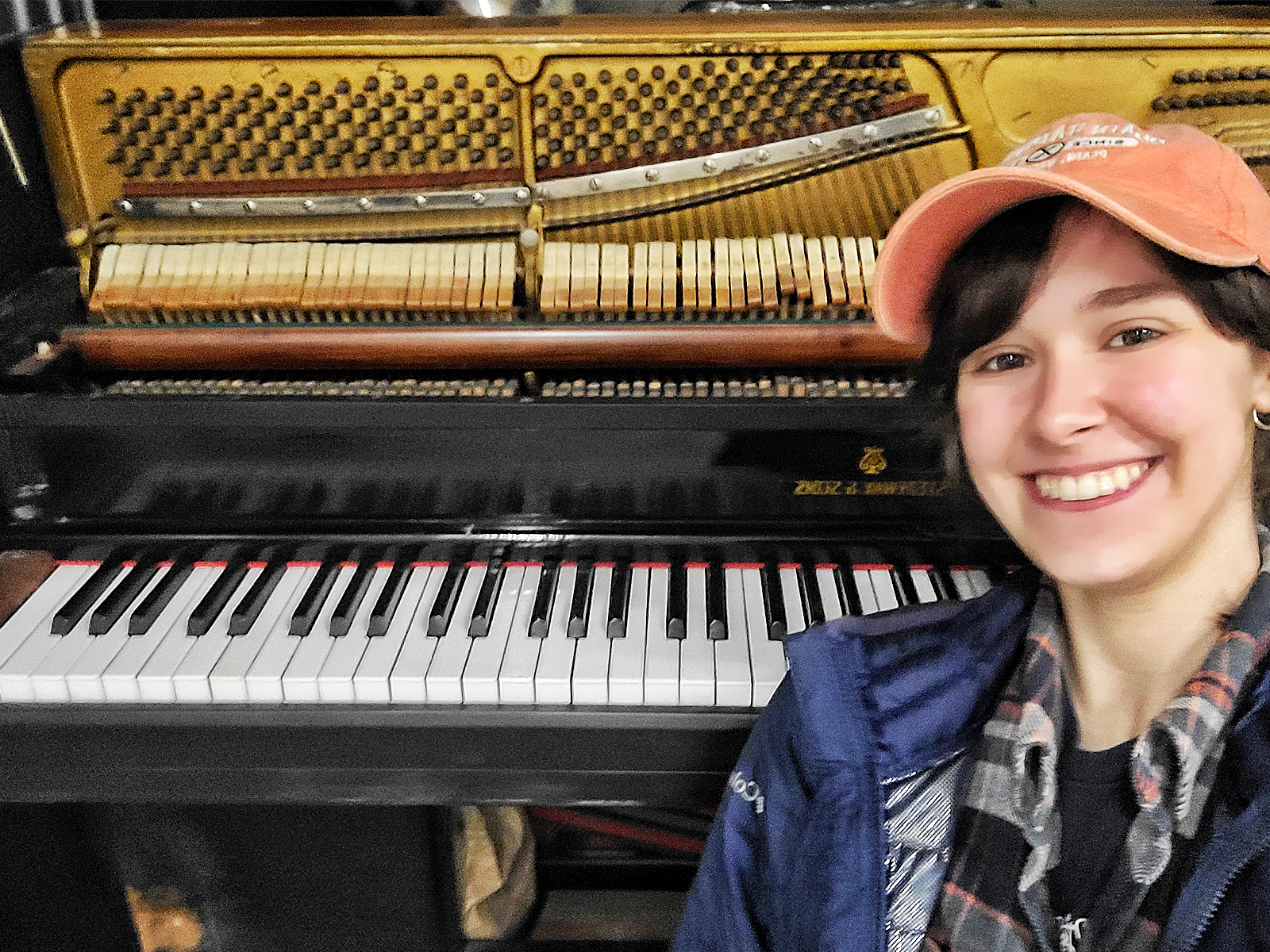
Charley Helene Milton is named for the three storms it outlived: Hurricane Charley in 2004, then Helene and Milton in the autumn of 2024, all along the same Florida coast at Sarasota. Milton came ashore at Siesta Key on October 9, the first storm to make landfall in Sarasota County since 1944. As its eye crossed overhead, the owner watched on a webcam while trees and debris flew through the yard; inside that ring the house stood completely still and untouched. The piano came through whole.
It was completed on December 7, 1945, the fourth anniversary of Pearl Harbor and the first observed in peacetime, built in a season that understood survival.
Liberto Shipped out of New York, returning to a New York artist loft · story coming soon More
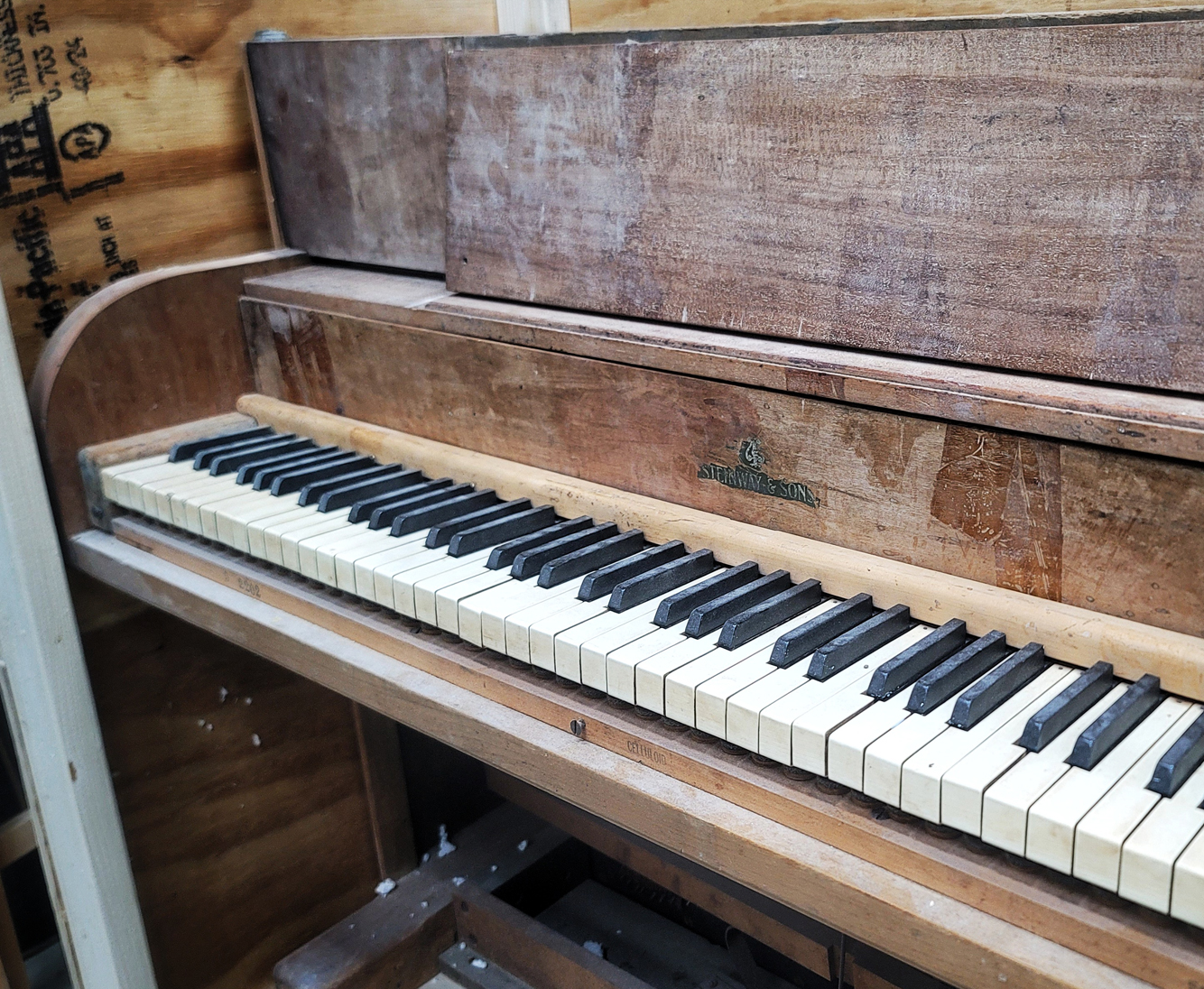
One of the rare Victory Verticals that shipped out of New York; it returns to a New York artist loft once restored. Its full story is coming soon.
Rebuilding a Victory Vertical
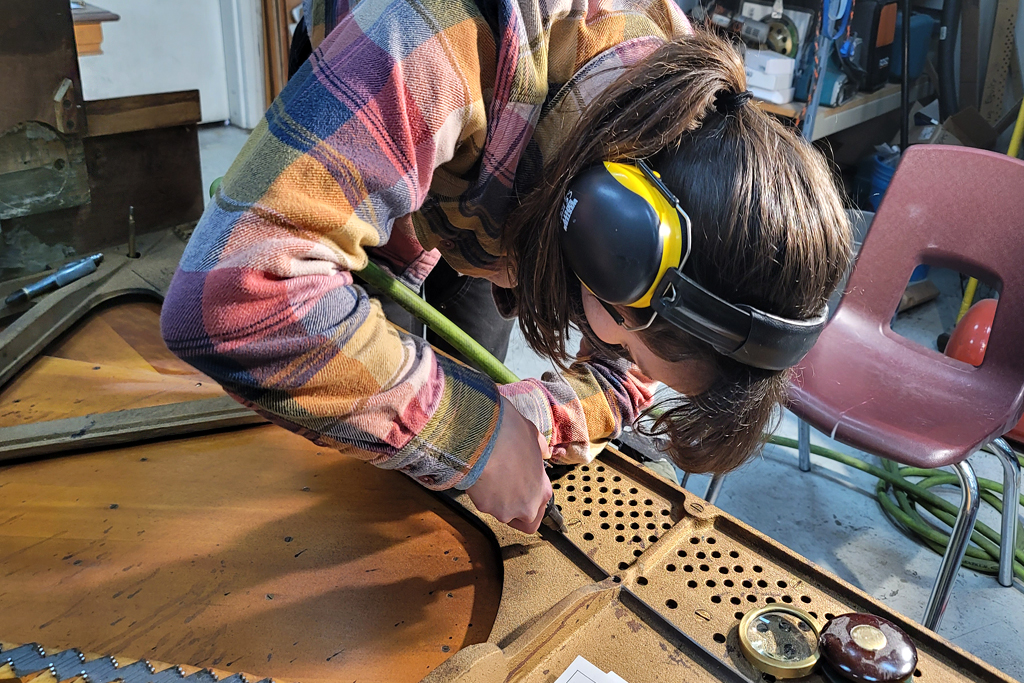

A Victory Vertical belongs in a rebuilder's hands
We document and restore the Victory pianos of World War II, then tell their stories through art and music. Each one preserves a piece of America's identity that might otherwise be forgotten.
Jordan A. Cook is one of a small number of specialists in the world devoted to the Victory Vertical, the upright piano Steinway built during World War II under the War Production Board. Over more than a decade she has rebuilt, restored, and maintained these instruments using tooling and original-pattern parts specific to them. She treats each one as a historical artifact, preserving the original materials and the wartime markings that make it a record of its moment in history.
Have a Victory question? Send Jordan a message. She answers personally and is available for phone consultation.

The Steinway Victory Vertical was compact, rugged, and finished in the color of the military it was shipped to: olive drab for the Army, blue-gray for the Navy, teal-blue for the Marines, and blue for the Air Force. The Victories were carried aboard B-17 bombers into active war zones to lift the morale of American troops.
There is no more fitting place to see one rebuilt than the Museum of Flight in Seattle, among the aircraft that once carried them. Jordan's restoration work there brings the story full circle: an instrument designed to travel by air, returned to voice in the company of the machines that delivered it to the front.
Her presence at the Museum of Flight connects two American legacies, aviation and music, for the visitors, veterans, and history enthusiasts who walk its galleries. The work is a living demonstration of how these instruments were made, why they mattered to the men and women who heard them overseas, and how they are being preserved for the generations who will hear them next.
Every piano has a painting
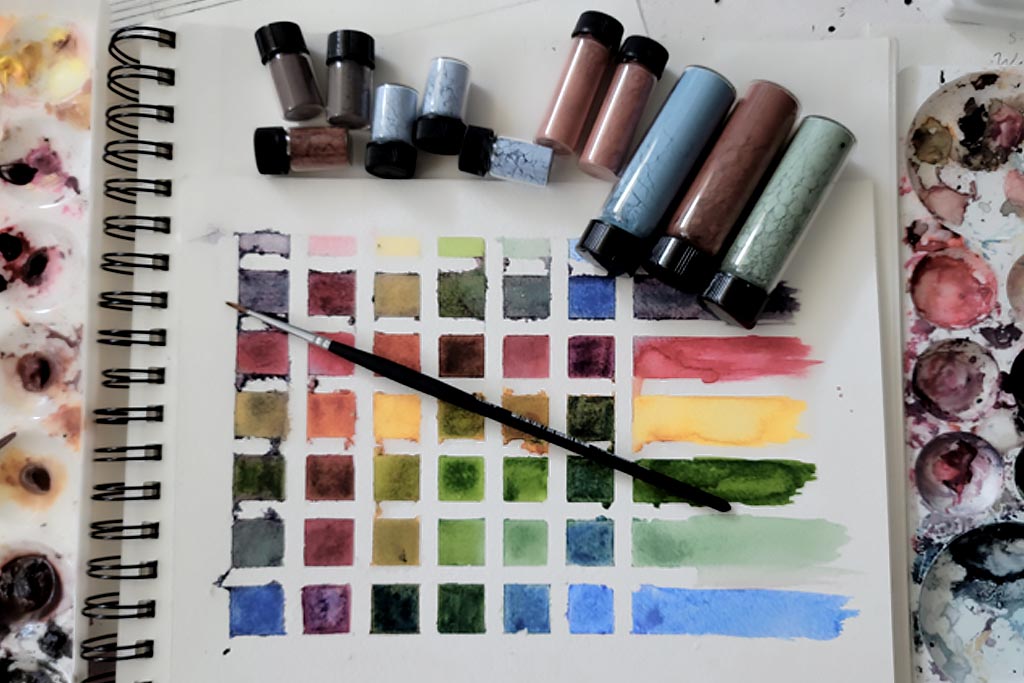
Jordan gathers color from the land itself, minerals, clays, lichens, and plants foraged across the Pacific Northwest. In one of her most recognized works she used charcoal and ash from an arson fire that destroyed her gallery on the Fourth of July.
The verdigris comes off the old strings as she works. She saves it. Ground into pigment, it becomes the painting of the piano it came from. Nothing is discarded.
The piano tells its own story, in its own color.
Arukah is a Hebrew word meaning restored to a condition better than the original. Through Arukah Piano, Jordan preserves the sound and legacy of Steinway Victory Vertical pianos, and pianos with unusual stories, with era-correct restoration and thoughtful modern upgrades. She sees rebuilding as a way of interpreting history, an act of remembrance that gives each instrument's legacy a voice for the future.
Jordan A. Cook · Arukah Piano
Jordan A. Cook
Rebuilder of WWII Victory Vertical pianos. Composer and internationally exhibited watercolor artist.
Jordan is a piano rebuilder and watercolor artist who believes history is alive and present, shaping the future as much as the past. She specializes in the restoration of WWII-era Steinway Victory Verticals, the compact pianos delivered by B-17 bombers into active war zones to boost troop morale, and she is one of very few rebuilders worldwide entrusted with their care.
Her journey into restoration began during a period of profound hearing loss, when she encountered a fire and water damaged 1925 Steinway L in need of its voice. Pressing a soot-covered key, she felt the piano's silent story, and her calling. That piano, named Arukah (Hebrew for restored to a condition better than its original), became the namesake of her business, Arukah Piano.
In addition to restoration work, Jordan composes music and is an internationally exhibited artist working in gouache, watercolor, and mixed media made from her own foraged pigments, paint, and ink. Her paintings have been shown in historical and contemporary galleries around the world, including the Children's Holocaust Museum at Terezin, the Matterhorn in Switzerland, and at Maidan Nezalezhnosti in Kyiv, Ukraine.
Filled her own gallery with paintings.
Interviewed by KMPS radio personality Ichabod Caine and the Waking Crew.
Held a joint gallery showing with the late Fred Oldfield at the Western Heritage Museum Art Gallery in Puyallup, Washington.
Performed at a concert at King David's Tower in Israel.
Featured speaker at The Art of Creativity workshop hosted at the vacation home of Prince William and Kate Middleton.
What is Arukah?
Arukah (אֲרוּכָה) means restoration in Hebrew, and it carries more than the English idea of making something the way it once was. It means restoring something to better than original condition: restoring to soundness, wholeness, health, and perfection.
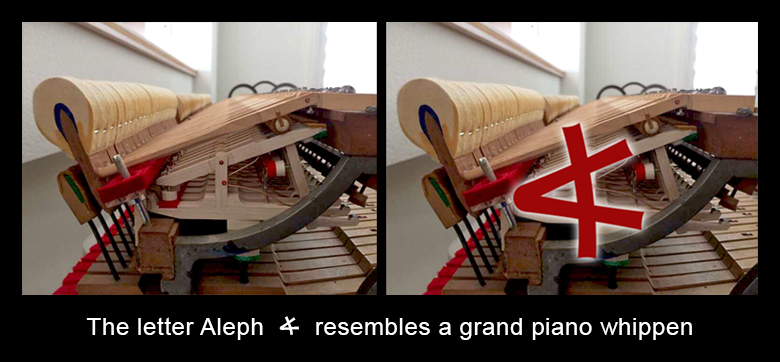
What looks like a sideways "A" in the logo is an aleph, the first letter of the ancient Hebrew and Phoenician alphabet. It is a fitting mark: it is the first letter in the word Arukah, and it echoes the shape of a grand piano whippen, the heart of the action that carries motion from the keys to the hammers and gives the player dynamic control. Like the whippen, the aleph is a silent letter that helps make sound when joined with others. As the first letter of the alphabet, it also means beginning. Arukah Piano brings new beginnings to pianos by restoring their sound.
Be first to hear
New restorations, the paintings made from them, and the release of our book Portraits of War. We send updates a few times a year.
To follow our work, email us and we will add you to our list.